
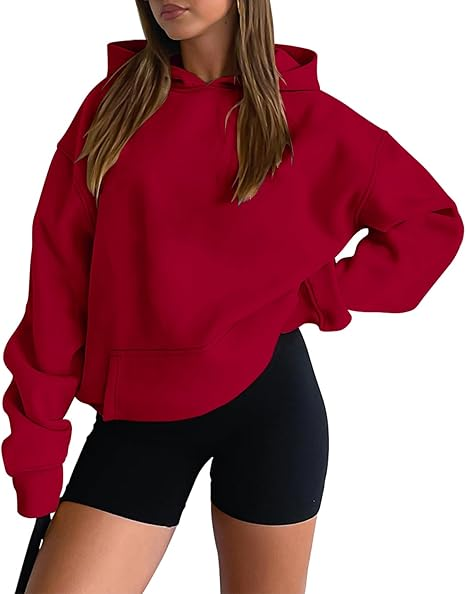
The Slow Fashion Staple: Advocating for Mindful Consumption and Longevity with Durable Everyday Garments
The global movement toward slow fashion is a necessary and urgent response to the environmental and ethical costs of high-speed, disposable clothing production. At the heart of this movement is a return to valuing longevity, quality, and timeless design over fleeting trends. Within this ethos, the simple, classic pullover sweatshirt emerges as a powerful symbol and a practical cornerstone of a mindful wardrobe. By its nature—a foundational, durable, and highly versatile garment—it perfectly encapsulates the principles of ethical production and responsible consumption. Choosing such a high-utility staple is not just a style decision; it is an economic, environmental, and ethical commitment to reducing one’s personal wardrobe footprint.
The core principle of slow fashion is encapsulated by the mantra: “Buy less, choose well, make it last.” The casual pullover is an ideal candidate for this philosophy because its design is intrinsically timeless. It is not tied to any specific seasonal hemline or passing cut; its silhouette has remained largely unchanged for nearly a century. This permanence ensures that a quality investment today will remain stylistically relevant for many years to come, avoiding the obsolescence that drives much of fast fashion. When purchasing such a staple, the focus shifts entirely from novelty to material integrity and construction. As previously discussed, the choice of durable, stable fabrics—often a cotton/polyester blend—is critical, as is the attention paid to reinforcement at stress points like the neckline and cuffs. A garment designed for durability minimizes the need for premature replacement, which is the single most effective way an individual consumer can reduce waste.
The environmental benefit of choosing a long-lasting staple cannot be overstated. The fashion industry is a major contributor to global pollution, water consumption, and landfill waste. By extending the life of a garment by just nine months, one can significantly reduce its carbon, water, and waste footprints. A well-made pullover, if properly cared for, can easily remain a useful and visually appealing part of a wardrobe for five to ten years. This incredible longevity stands in stark contrast to items that are worn only a handful of times before being discarded. Furthermore, consumers committed to mindful consumption are often more inclined to repair and repurpose high-quality items. A small tear or stain on a favorite sweatshirt is more likely to be patched or tie-dyed, rather than simply tossed, thereby keeping valuable textile resources out of the waste stream and embracing a circular economy mindset.
The ethical dimension of slow fashion is equally compelling. The production of a quality staple often involves stricter adherence to ethical labor practices. While low-cost, disposable items rely on speed and volume, which can compromise worker safety and fair wages, brands focused on longevity must invest in higher-quality manufacturing processes. By consciously choosing a well-constructed garment, the consumer supports a production chain that values skilled labor and robust material sourcing. Although detailed information may not always be visible, the price of a quality, durable item often reflects a more responsible allocation of costs, including fair wages and higher-grade raw materials. Consumers committed to mindful purchasing can seek out companies that prioritize transparency in their supply chain, ensuring that their comfort wear is not built on exploitation.
Incorporating the pullover into a slow fashion philosophy also requires a commitment to holistic wardrobe planning. Instead of viewing it in isolation, the garment should be seen as part of a small, interconnected ecosystem of clothing. A vibrant, solid-colored pullover, for instance, should be chosen specifically because it complements the existing trousers, outerwear, and footwear already owned, maximizing its utility and reducing the temptation to buy new coordinating items. This mindful, strategic purchasing pattern—buying only what is needed and what integrates perfectly—is a powerful counterpoint to impulse shopping and the pressures of trend cycles. The simple, non-fussy nature of the pullover aids this process; it is inherently designed to coordinate with almost any casual trouser or legging.
Finally, the shift toward slow fashion is a recognition of the intrinsic value of materials. A deep dive into the properties of cotton and polyester blends reveals that these fabrics are complex, engineered textiles that deserve respect and proper care. By washing the garment carefully, air-drying when possible, and avoiding excessive abrasion, the consumer preserves the textile’s quality and appearance. This act of care is a form of gratitude—an acknowledgment that this simple garment is a valuable, long-term asset. The casual pullover is not just a comfortable shirt; it is a symbol of mindful living, a testament to the enduring power of quality, and a crucial foundation for a responsible and sustainable modern wardrobe. By choosing a durable staple, we choose a slower, more deliberate, and ultimately more fulfilling relationship with our clothing.
https://www.amazon.com/onlypuff-Hoodies-Oversized-Sweatshirts-Pullover/dp/B0C9LD7746/ref=sr_1_30?dib=eyJ2IjoiMSJ9.Wz3OzZu8SrJp6kH6ZpXl9JOxy5jA-po7Bi78xgVaTJDkH7rVW_xjEAnxrwEbyglm1Jg1-nSDHTjJjmUdp4TxfQVrekU48xBiw2S2bBew29tlCs6fi4s3sfq2-vuNcOhdDnzyw7g4F0NNYnbGrS2pRwWjJmv1BJ0erJ_jwbRRBX9BlOPvLbzMjgZW8lkpyNayEtvXzpt6KEqops9ybujBhDfAMD-wI38sQWDWlTb7zW5ElrmIHKI8adMz7lxChT1PbjMb-OqKZ56f5b-TvQYVgZQMTOiG1uQvSz3m26nW2oY.h0YR9H-92T9yVdcJwB7RYAlcZqQYI6fKgn5o0XqwET0&dib_tag=se&keywords=hoodie&qid=1763440005&sr=8-30&th=1&psc=1